Short answer: research shows the large majority of Google clicks go to organic results, and users tend to trust organic listings more than ads (HigherVisibility, organic vs. paid search comparison). In other words, even without an ad budget, a properly built website can still be a genuine customer acquisition channel — it just needs a more patient, more strategic approach.
In this guide, we cover how businesses with no ad budget, or a very limited one, can turn their website into an organic growth engine.
Why Does a Website Still Matter for a Business With No Ad Budget?
Organic search results are generally perceived as more trustworthy; many users consciously or unconsciously skip "sponsored" labeled results and head straight for the organic ones. That means ranking well organically still carries real commercial value, even if you have no ad budget at all.
The advantage of ads is speed: traffic starts flowing the moment you turn the budget on. The advantage of organic traffic is durability: once earned, a ranking doesn't reset overnight when a budget gets cut. Both channels serve different needs — but for a business with no ad budget, organic traffic becomes the one realistic growth channel available.
Why Is Organic Traffic Considered More Sustainable?
Investing in a website isn't an expense that stops working the moment you stop spending, the way a monthly ad budget does — it's an asset that accumulates over time. A blog post written a year ago can still be bringing in organic traffic today; a year-old ad budget has zero effect today.
How Do You Turn Your Website Into an Organic Traffic Engine?
This transformation rests on three fundamentals: a properly built web design foundation, regular content that delivers real value, and a patient time horizon. If any one of these three is missing, an organic traffic strategy won't deliver the expected result.
On the technical side, the priority is making sure the site can actually be read correctly by search engines — clear heading structure, mobile compatibility, and fast loading are prerequisites for this whole process (see Google's SEO starter guide). Without this foundation, even excellent content won't reach the visibility it deserves.
How Exactly Does Content Replace What Ads Would Otherwise Do?
With ads, you show your message directly to a target audience; with organic, you let that audience find you on their own terms. The way there is producing genuine, comprehensive content that answers the questions your potential customers are actually searching for — price, process, comparisons, "how does this work" style queries.
For a business with no ad budget, a website isn't a brochure — it's a sales channel that, fed correctly, grows on its own.
Why Vinci Studio?
Vinci Studio itself grew without an ad budget, purely through organic traffic and form conversions — we're not preaching this strategy in theory, we're running it in our own business. What sets us apart in our Renaissance-spirited approach to digital production:
- First-hand experience as an agency that grew with zero ad spend
- SEO-friendly, mobile-first web design built with organic traffic in mind from day one
- Ongoing support for a content strategy built around real, useful answers
- Transparent, measurable reporting through Google Analytics and Search Console
What Does Growing Through Organic Traffic Actually Look Like in Practice?
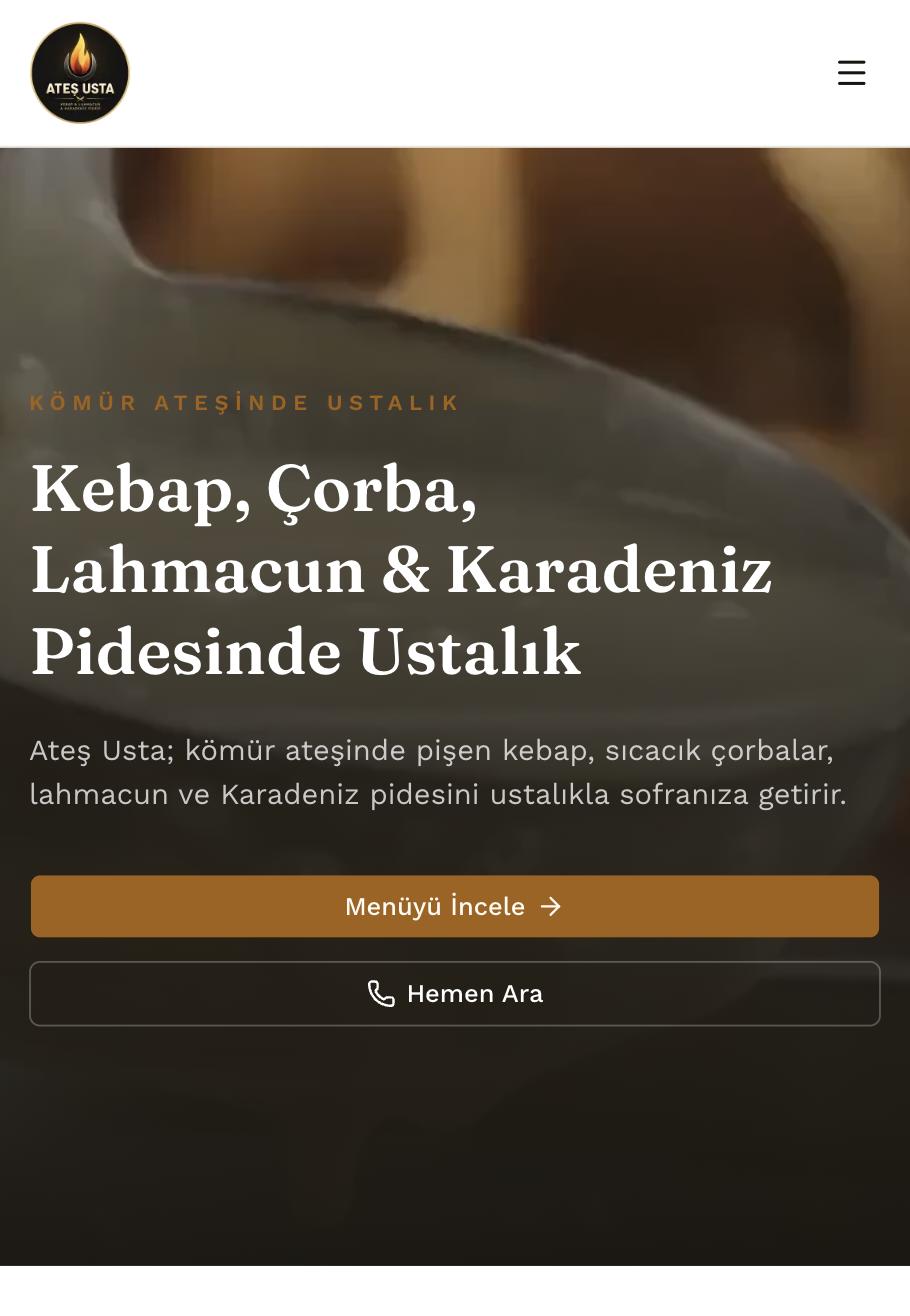
On the Ateş Usta website project, an ad budget wasn't the priority either; the priority was making the site findable on its own, organically. That's why the very first steps focused on technical SEO fundamentals (mobile speed, a clean sitemap, correct meta data) and a steady flow of blog content.
As expected, most of the early traffic came from brand-name and direct queries. But as the blog content kept growing, impressions started rising for more specific, long-tail queries too — a concrete demonstration that a site can gain visibility without any ad spend at all.
The most important observation from this process: visitors coming from organic search tended to already have a specific need or question that led them to search and find the site, giving them a notably higher-intent profile than the more "random" traffic that ads often bring in.
Which Types of Content Bring the Most Organic Traffic?
Our general observation: "how-to," "how much does it cost," and comparison-style ("X vs. Y") titles are among the content types that get the most impressions on searches carrying direct commercial intent. These formats capture readers who are already at a decision-making stage.
By contrast, very broad, general titles usually produce results more slowly, because competition is much higher and the reader's intent is far less clear.
What Does This Observation Look Like in Practice?
When building a content calendar, target specific questions a potential customer is actually searching for at the decision stage, rather than broad, general topics; this is how a business with limited content production capacity and no ad budget gets the most out of every piece it publishes.
Points to clarify before starting an ad-free organic traffic strategy:
- Is the website technically ready for organic traffic? Have mobile speed, a clean sitemap, and correct meta data been checked?
- Have the real questions your target audience searches for been listed? Is the content calendar built around those questions?
- Has a patient time horizon been accepted? Is it understood that organic traffic typically becomes meaningful within 3-6 months?
- Are measurement tools (Search Console, GA4) set up? You can't improve a strategy without seeing which content is actually working.
A business that clarifies these steps can turn its website into a real customer acquisition channel even without an ad budget — the only difference is that the results build up over months, not overnight.
Common Mistakes
The most common mistakes we see in the website strategy of businesses trying to grow without an ad budget:
- Launching a website with no content at all and expecting "organic traffic" to show up on its own
- Skipping technical SEO fundamentals (mobile speed, sitemap) and jumping straight into content production
- Abandoning the strategy after seeing no results in the first few weeks
- Focusing on very broad, highly competitive keywords
- Trying to answer "is this working?" without ever setting up measurement tools
How Should This Strategy Differ for Budget-Constrained Businesses?
For a business with a limited ad budget, prioritization matters far more; every piece of content needs to be chosen to answer the questions carrying the most commercial intent. A general "let's cover everything" approach spreads limited resources too thin to be effective.
What Does This Difference Look Like in Practice?
For a business that can produce one or two pieces of content a month, those pieces need to target queries close to actual purchase intent (price, comparison, process) rather than random topics — that's how limited capacity produces the highest possible impact.
Who Will Benefit Most From This Guide?
This guide offers a directly actionable roadmap for small and mid-sized businesses with no ad budget, or a very limited one.
The same approach applies to businesses that prefer to put their entire budget toward another channel (field sales, for example) but still want a strong digital presence.
- Small businesses with no ad budget, or a very limited one
- Growing businesses looking to shift spend away from ads toward organic traffic
- Any business, of any size, aiming to build a sustainable, long-term digital asset
Conclusion: Take Action Now
Would you like to turn your website into a real customer acquisition channel, even without an ad budget? At Vinci Studio, we listen to your needs, map out a roadmap tailored to you, and report transparently throughout the process. Get in touch with us or send your request in seconds using the "Get a Quote" button on the homepage.